
By Trevor Brown
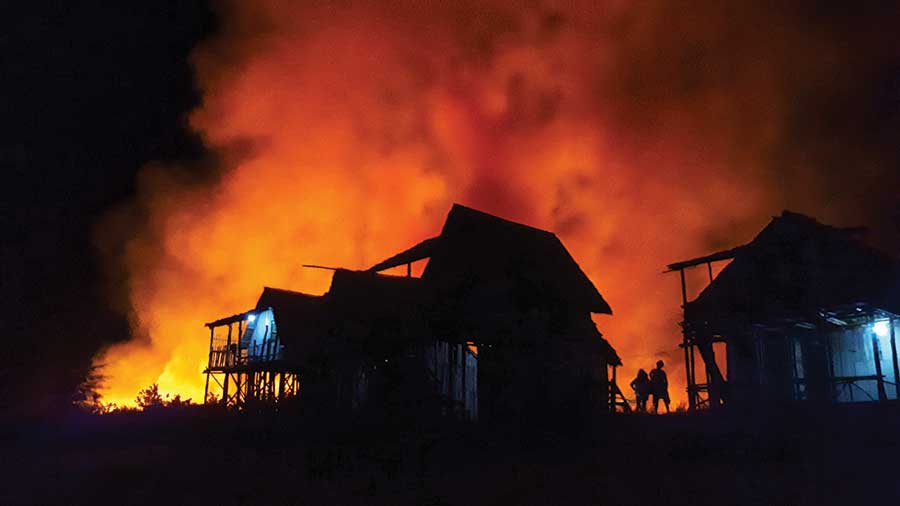
When wildfires swept through Southern California’s Palisades region in January 2025, nearly 7,000 structures were reduced to ash. Families lost not just homes but decades of memories. Amid the devastation, a powerful movement emerged — one focused on resilience, collaboration, and rethinking how we build.
A couple of months ago, Jacob Schnibbe, California Territory Manager for SuperForm ICF, and I joined hundreds of residents, contractors, and design professionals at the Pacific Design Center in West Hollywood for the Team Palisades Building Product Fair — a first-of-its-kind event uniting more than 30 vendors committed to fire-resistant construction.
What began as a small idea — “a cocktail-hour conversation about building better” — evolved into a large-scale exhibition showcasing products and partnerships designed to ensure history doesn’t repeat itself.
From Tragedy to Teamwork
Organizer Dennis Smith envisioned a community event that would do more than hand out brochures. He wanted survivors to see, touch, and compare real materials capable of standing up to fire. Within weeks, the concept grew from a modest round-table to a comprehensive trade show drawing hundreds of attendees and a full slate of fire-resilient brands.
We thought we’d be sitting in a conference room talking with a few people; instead, we were part of an incredible movement — 32 vendors all united around one goal: rebuilding smarter.
The event’s energy was unmistakable. Manufacturers, installers, architects, and homeowners mingled as equals, trading lessons learned and exploring ways to collaborate. The shared sentiment was that: competition takes a back seat when the mission is saving lives and property.
A Broader Cross-Section of Loss
Media coverage of the Palisades fires often focused on multimillion-dollar estates perched above the Pacific Ocean. But at the trade show, a different story emerged.
We spoke with families who lost modest 1,200-square-foot homes that had been in their families for generations. Most of the lost homes weren’t luxury properties — they were everyday homes filled with history.
That diversity of experience underscored a sobering truth: wildfire doesn’t discriminate by ZIP code or square footage. Every homeowner — from Malibu mansions to inland neighborhoods — needs access to resilient design solutions that don’t break the bank.
ICF and the Power of Resilience
Jacob Schnibbe was on hand, helping me spread the word and to educate attendees about the benefits of Insulated Concrete Forms. “We went down expecting to showcase resilient products,” Schnibbe says. “But what stood out most was the resilience of the people — homeowners determined to rebuild stronger and safer.”
SuperForm’s participation, alongside Innovative Drafting and Design, signaled a growing commitment to expanding ICF construction across California. As Schnibbe notes, the Golden State’s combination of seismic risk, wildfires, and rising energy costs makes it an ideal market for next-generation building methods.
A Coalition of Fire-Resistant Brands
The trade show was a showcase of synergy. Vendors weren’t just pitching products; they were forming alliances. Among the standouts were Vulcan Vents, whose self-closing, fire-rated vents prevent embers from entering attics or crawl spaces — a critical weak point in many homes. eStucco, a fire-resistant exterior finish, is gaining national attention for both aesthetics and performance. Hulk Systems offers waterproofing and fire-rated coatings that seal gaps and soffits, complementing ICF walls for full-envelope protection.
“It felt like a team effort,” Schnibbe notes. “ICF walls, eStucco exteriors, Vulcan Vents, and Hulk Coatings — together they form a complete defensive system. No single product is the hero; the combination is.”
That cooperative spirit extended across traditionally competing manufacturers. Even representatives from ICCF (Insulated Composite Concrete Forms) companies joined the discussion, emphasizing shared advocacy for non-combustible construction.
Design Collaboration:
Starting Fire Safety on the Drawing Board
One of the most impactful realizations came from the Innovative Drafting & Design booth, where I represented the firm in the absence of owner Heather Herring-Brown. As homeowners explored reconstruction options, many discovered that fire-resilient building starts with fire-resilient design. By integrating fire-safe materials — like eStucco finishes or Vulcan Vents — directly into the plans, we eliminate surprises during construction.
Architects and engineers echoed that sentiment, emphasizing early-stage collaboration. Encouragingly, many California jurisdictions are now accepting draftsman-drawn plans accompanied by structural engineering, streamlining approvals and reducing design costs for fire victims.
“It’s about speeding up recovery,” Heather Hering-Brown stated. “Families can’t wait months for permits. When we pair draftsmen with structural engineers or architects, we maintain safety and save time.”
Affordability and the Rebuild Reality
Insurance payouts rarely match true reconstruction costs. Many attendees confessed they’d need to stretch every dollar.
That’s where ICF’s long-term savings — lower energy bills, reduced maintenance, and disaster mitigation incentives — become crucial.
Contractor JJ Penna of Penna Construction, a third-generation ICF builder, offered practical context: In Southern California, ICF homes cost roughly 2% to 5% more upfront than stick-built equivalents, yet deliver substantial lifecycle savings through energy efficiency, insurance reductions, and durability.
“You can offset that margin by downsizing HVAC systems or shortening build schedules,” Schnibbe notes. “Speed, strength, and sustainability pay dividends.”
More Than Fire Protection
While fire was the headline issue, resilience extends further. ICF structures excel in seismic zones, hurricane regions, and extreme climates alike. ICFs are up to 10 times stronger than wood framing, eliminating costly hardware like Simpson hangers and shear ties — savings that can reach six figures on large projects. Continuous insulation cuts heating and cooling loads, which increases energy efficiency. This is vital in states that are pushing aggressive energy-use reductions. Thicker walls mean quieter interiors and fewer maintenance cycles.
“We’re solving multiple problems with one solution,” Penna emphasizes. “Fire, wind, earthquake, and energy — ICF checks every box.”
Shifting the National Mindset
For decades, North America’s default has been wood framing — “building houses out of firewood,” as I like to bluntly put it. Yet each wildfire season proves the limits of that tradition.
Across Europe and Asia, concrete and masonry dominate residential construction, resulting in structures that stand for centuries. The U.S. is slowly catching up, driven by escalating climate risks and a new generation of builders championing change.
Statistics reinforce the urgency: By mid-year, the U.S. had already recorded 44,000 wildfires. As Penna warns, “They’re not slowing down.”
Education is the next frontier — reaching policymakers, insurers, and homeowners with data on resilient design’s ROI. Events like Team Palisades are turning points, transforming awareness into action.
Emerging Innovations: MST Rebar and Beyond
Among the technical conversations at the show was MST Structural GFRP Rebar — a non-corrosive, fire-resistant fiberglass reinforcement poised to revolutionize concrete construction. MST’s upcoming seismic-zone testing could soon extend approvals into California’s seismic zone D, unlocking widespread adoption. Combined with its heat tolerance, light weight, and superior tensile strength, MST represents the next evolution of sustainable reinforcement.
Paired with Hulk’s waterproofing systems, which now carry fire-rating approvals, and integrated design from Innovative Drafting & Design, builders can deliver 360-degree resilience — from foundation to rooftop vent.
Beyond the Burn: A Blueprint for the Future
The emotional weight of the Palisades event was undeniable. Many attendees arrived grieving; most left empowered. People weren’t looking for sympathy. They wanted solutions — real, tangible paths to rebuild safer. For Schnibbe, the experience underscored the importance of regional collaboration. Covering seven Western states, he sees parallels everywhere: communities confronting wildfire, drought, and seismic risk all at once. The takeaway is universal: Resilient building isn’t optional — it’s essential.
How to Get Involved
Homeowners, builders, and suppliers can join the movement by connecting with TeamPalisades.org, exploring ICF solutions, and consulting with specialists like Innovative Drafting & Design for fire-resilient plans. Supporting brands such as Vulcan Vents, eStucco, Hulk Systems, and MST Structural Rebar ensures every layer of the building envelope contributes to safety and sustainability.
A Call to Build Better
As smoke clears and rebuilding begins, one message echoes from the Pacific Design Center to construction sites nationwide: Stop building houses that catch on fire!
By embracing materials that don’t burn, rot, or collapse under stress, the industry can turn tragedy into transformation. The Palisades event proved what’s possible when manufacturers, designers, and homeowners align around the common goal of creating homes that stand strong for generations.
The blueprint is here. Now it’s up to all of us to build it with ICF!

Trevor Brown
Trevor Brown is the owner and operator of Innovative Building Products, a multiline ICF and ICF accessories distribution company. He has been in the ICF industry for over 20 years, starting as an installer and distributor. He has managed the Western U.S. for an industry-leading ICF company and is now an independent consultant for ICF builders and homeowners across the country. He is also the co-host of the Build With ICF Podcast, which can be found on the website www.buildwithicf.com.






FRP rebar isn’t better than steel at resisting fire, it might be worse since the polymer deforms at lower temperatures than steel. Tile/porcelain (see Daltile porcelain shingles) are better than the wood shake roofs in much of this area also partially conditioned attics would help prevent ash from entering attics. Not to mention steel building could also be partial answer where ICFs aren’t suited.