By Elise Vue and Delaney Burke
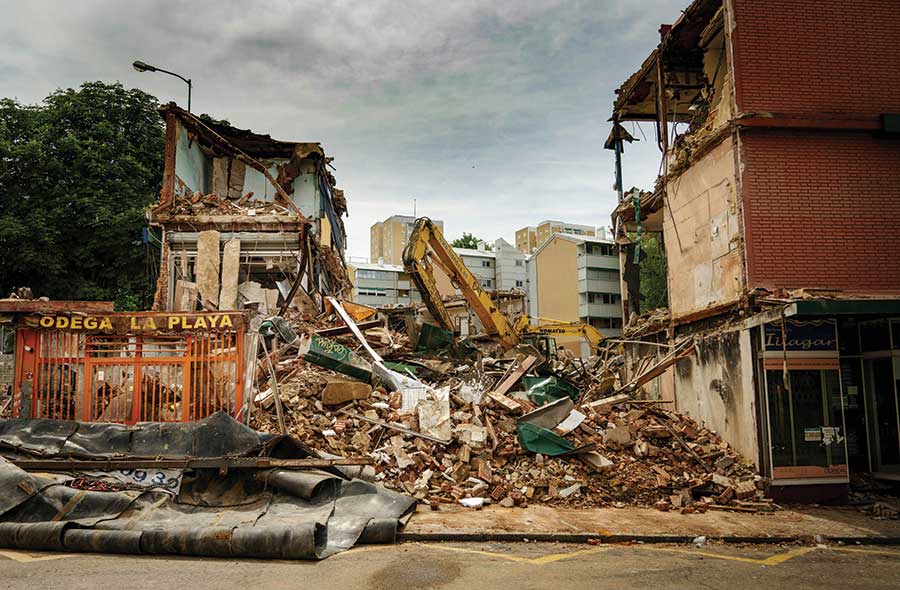
Photo courtesy of Jose Antonio Gallego Vázquez
As natural disasters grow more intense and frequent worldwide, concerns are mounting around our infrastructure’s ability to withstand these seemingly inevitable weather events, including hurricanes, tornadoes, wildfires and severe seismic activity. In 2020 alone, 3 major earthquakes across Croatia, Turkey, and Greece caused more than 1 billion euros in damage.
Cast-in-place reinforced concrete walls have traditionally been used for earthquake-resistant structures, but having a range of viable construction methods helps make seismic safety more accessible across residential and commercial buildings.
Insulated Concrete Forms (ICFs) are the latest in foundation and structural wall framing methods that have proven themselves in real-world situations and seismic testing simulations, adding another option for durable, disaster-resilient construction. ICFs, in combination with other seismic design elements, enable a holistic building approach which protects structures, occupants, and passersby from earthquakes, as well as other threats like high-wind speeds, water infiltration, impact from debris, and even terrorism.
Earthquake Risks
In terms of life safety, earthquakes themselves are not what cause injuries and death. It is the aftermath of the seismic activity that results in fatalities. Partial or complete building collapses, bridge and road failures, downed power lines, and impact from nonstructural elements are the main culprits. In fact, a 2017 study in New Zealand reported that “damage to non-structural elements was the cause of 61% of the 1048 recorded earthquake induced injuries.” (https://www.researchgate.net/publication/319206936_Which_building_components_caused_injuries_in_recent_New_Zealand_earthquakes)
Since earthquakes cannot be prevented, it is a matter of reinforcing public and private infrastructure to minimize harm. Similarly, it is critical that seismic safety is made more accessible across residential and commercial buildings in earthquake-prone regions so even the most vulnerable populations are protected. Seismic building codes exist (https://www.fema.gov/emergency-managers/risk-management/earthquake/seismic-building-codes), but they are unevenly adopted and enforced by country and state for new construction, and even less likely to be incorporated in renovations as a seismic retrofit.
When implemented, the recommended holistic seismic design tactics, including considerations for the soil, foundation, walls, roof, and interior components, can improve public safety and minimize the necessary disaster recovery efforts, which leads to substantial cost avoidance and lives saved.
Earthquake Testing for Vertical Walls
ASTM E2126 (https://store.astm.org/e2126-19.html) is the most comprehensive test standard for gauging the seismic shear strength and ductility of the vertical elements of the wall and their capacity to resist lateral shear forces. The results translate to a building’s capacity to handle the in-plane loads of an earthquake while maintaining overall structural integrity.
This North American testing standard is “intended for specimens constructed from wood or metal framing braced with solid sheathing or other methods or structural insulated panels.” Up until recently, ASTM E2126 had not been utilized to test the dynamic shear abilities of Insulated Concrete Form walls.
In 2024, building materials manufacturer Tremco Construction Products Group began collaborating with the Eucentre Foundation (https://www.eucentre.it/en), a global leader in earthquake engineering and research in Italy, to investigate the performance of its Nudura Insulated Concrete Forms for earthquake-resistant construction.
Charts courtesy of Tremco CPG
ICF wall assemblies are comprised of two sides of rigid EPS foam held together by engineered plastic webs and are filled with steel-reinforced concrete. ICF construction is ideal for both foundation walls and above-grade walls to create a seamless building envelope made of a monolithic concrete core and continuous interior and exterior insulation. ICF walls have long been touted for their durability and resiliency to extreme weather events, but some in the engineering community questioned their seismic performance.
They therefore challenged ICF manufacturers to formally demonstrate their products’ ability to meet or exceed the structural shear performance achieved by traditional cast in-place concrete wall systems. There was a notion that during an earthquake, the walls might crack along the webs, which serve to both keep the two insulation panels in place and as an anchor point for interior and exterior finishes.
ICF Seismic Test Results
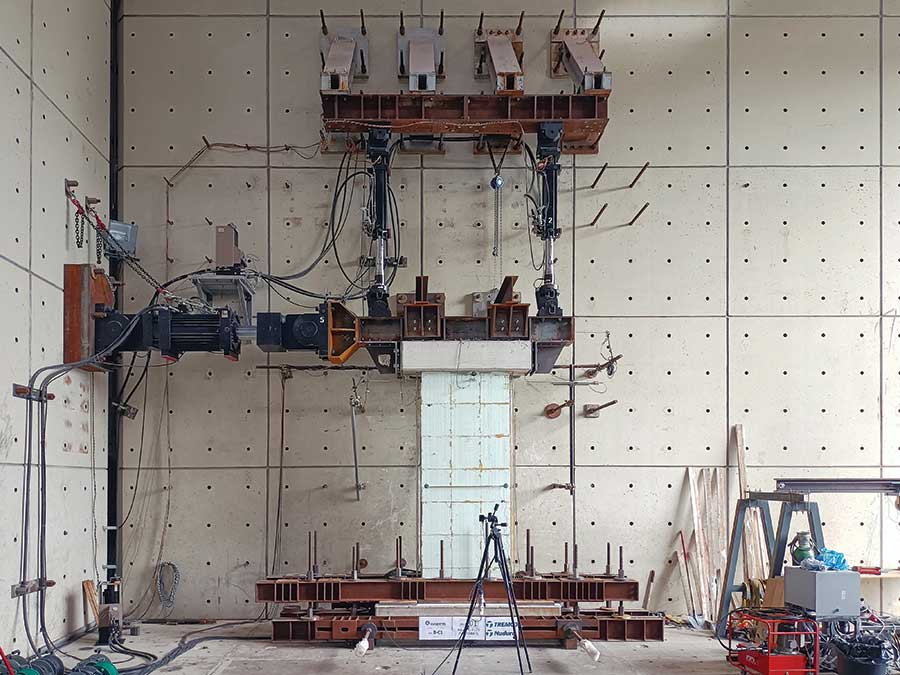
At their Pavia, Italy, facility, the Eucentre Foundation conducted numerous ASTM E2126 tests on cast-in-place concrete test specimen walls and Nudura ICF wall assemblies of equivalent size and concrete quality to compare their performance.
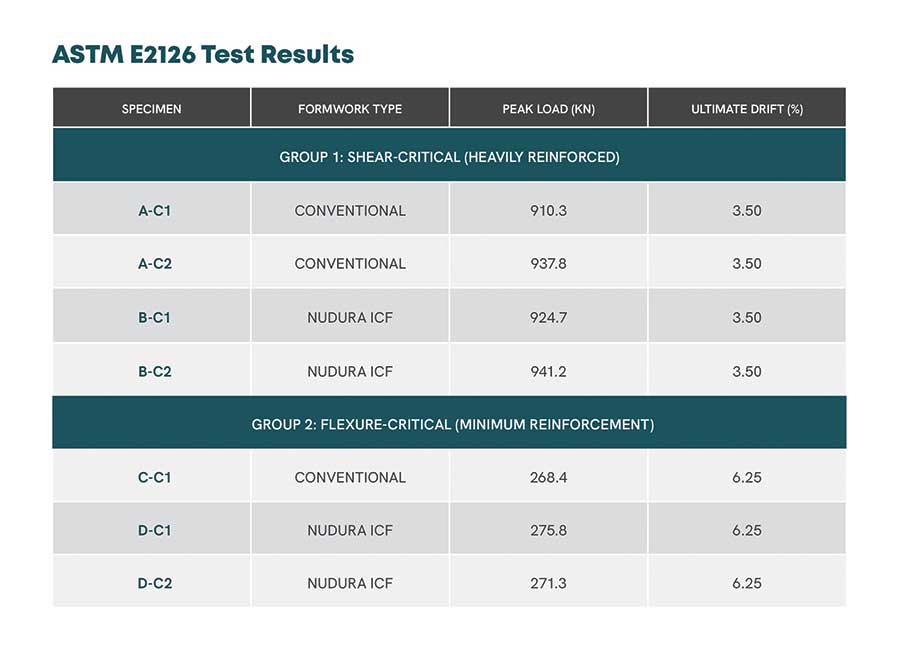
Using a 1,000 kN actuator, the results show that the Insulated Concrete Form walls performed equally to the conventional concrete walls in reducing lateral sway when faced with seismic shear loads. See table below. This makes Nudura the only ICF manufacturer to have passed ASTM E2126, a feature now patent-pending.
The findings also indicate that the success of concrete shear walls is less dictated by whether the walls use stay-in-place insulated forming systems or traditional removable formwork, but rather dependent on the steel reinforcement layout and type of concrete.
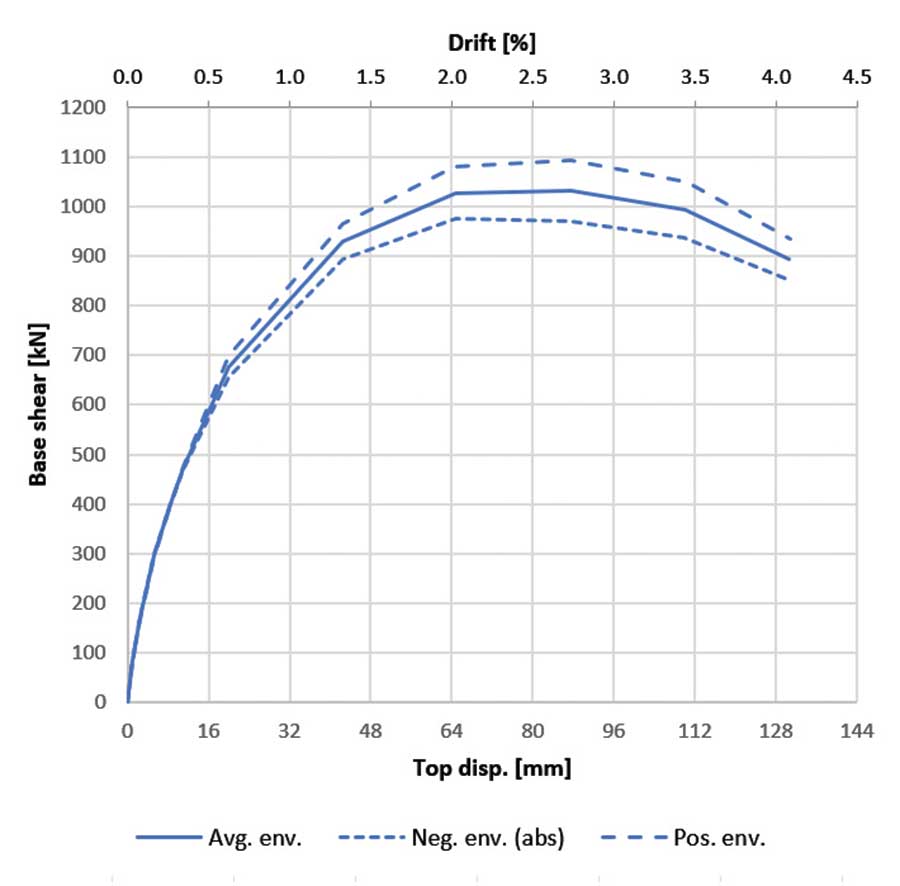
To take the test a step further, the team wanted to push the ICF walls to absolute failure and therefore had to secure a 2,500 kN actuator to see the full range of its capabilities. The graph below highlights the envelope curve of the cyclic response for the ICF specimen, B-C1, with the maximum nominal imposed displacement of 80mm.
Afterwards, the researchers removed the foam from the Insulated Concrete Form walls to investigate the extent and propagation of concrete cracks. At their failure points, the type of damage was very similar between the traditional formwork and ICF specimens. Cracks in the concrete were observed primarily on the opposite side of the actuator, propagating from the edges towards the center of the wall. Researchers also noted concrete spalling and rebar deformation across the board.
Global Earthquake Testing Standards
With this seismic analysis data in hand, the Nudura and Eucentre Foundation testing has far-reaching global implications. Beyond earthquakes, a wall designed for high seismic resistance will resist many other hazards including blast loading, progressive collapse, tsunami effects, and high wind pressures. Therefore, the testing procedures behind seismic buildings can benefit not only high-risk seismic regions but also communities around the world exposed to countless other unpredictable forces.
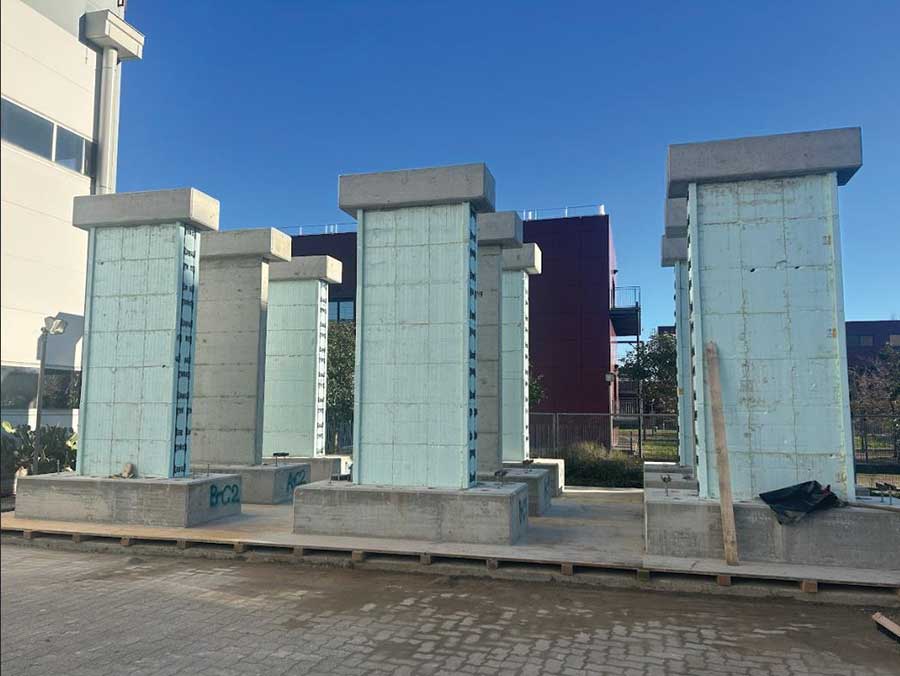
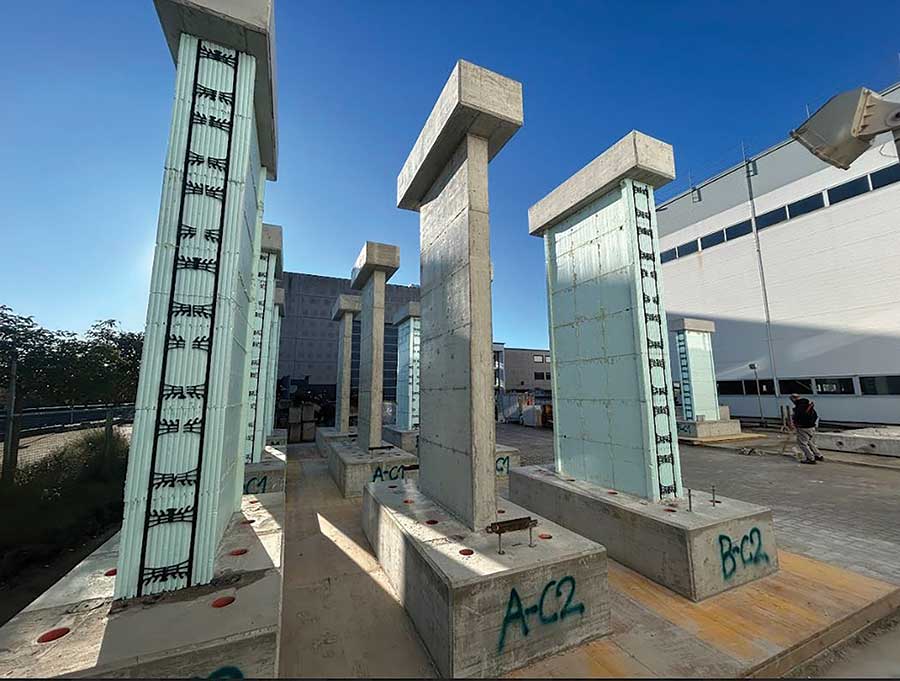
Photos courtesy of Tremco CPG
The goal is now to standardize building material performance testing in Europe to add to their building codes enforcement and reduce the infrastructure damage and loss of lives associated with seismic activity.
The Future for ICF Construction
Now that Nudura Insulated Concrete Form walls have successfully passed ASTM E2126, validating that they can resist seismic activity without compromising structural integrity, they can be used to more confidently construct earthquake-resistant foundations and buildings.
And when seismic retrofitting isn’t possible or in areas like tight, urban centers where building large new structures is not feasible, ICFs can be used to construct above-ground or below-grade safe rooms and storm shelters (https://www.nudura.com/applications/saferooms) of any size for refuge.
Together, Nudura and ICF industry documentation (https://www.nudura.com/resources?DocumentTypes=Testing), which includes UL and Canada Fire Listings, FEMA approval, ICC 500 certification, NFPA testing, and energy performance testing, tells a compelling story that Nudura ICF walls are an ideal building method for disaster-resilient structures that enable greater risk mitigation, stronger occupant protection, and faster recovery times for communities faced with tornadoes, hurricanes, wildfires, or earthquakes.
Conclusion
Rigorous testing at the Eucentre Foundation laboratory has confirmed that reinforced concrete walls using Nudura Insulated Concrete Forms perform just as effectively as traditionally formed concrete walls during seismic activity. This validation enables Nudura and the Eucentre Foundation to further shape global earthquake building codes and testing standards for broader implementation.
By adding ICF walls to the roster of tested and verified earthquake-resistant methods, building owners, contractors, and architects now have another building material option to achieve their unique construction and design criteria, with seismic safety at its core to defend infrastructure and lives in seismic zones.
Elise Vue & Delaney Burke
Elise Vue is the Content Marketing Manager for Tremco CPG Inc., including their brands Nudura, Dryvit, Tremco Sealants, and Tremco Roofing. She leads the research and writing of educational articles for the architecture and construction communities around building science, sealants, waterproofing, exterior finishes, and Insulated Concrete Forms. Her work has been featured in IIBEC Interface, Walls & Ceilings, Construction Specifier, and Pushing the Envelope Canada. Learn more at www.tremcocpg.com. Delaney Burke is the R&D Engineering Manager for Tremco CPG and has been with the company for seven years. She has a degree in chemical engineering and leads a team of engineers who support R&D, operations, and business strategy projects.